Trending

Two pairs of footwear sit by the front door and one forecast you don't quite trust. The boots look like the sensible choice; the trail shoes look like more fun. On the fell, neither is automatically right. What matters is the ground underfoot — wet rock, peat hag, loose scree, a dry summer trod — and what the weather has done to it.
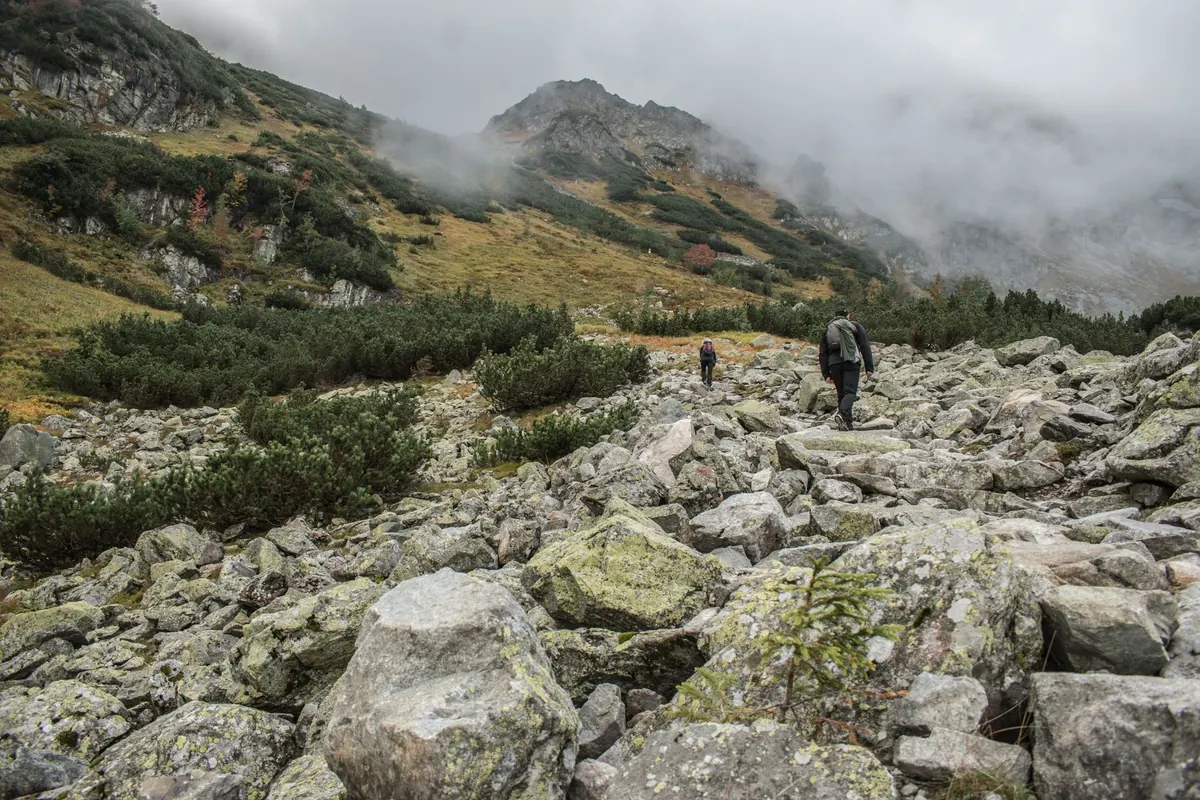
Fell walking in Britain is a mix of surfaces, often within a single hour. Dry Borrowdale volcanic rock is wonderfully grippy; the same rock in the wet is greasy. Polished limestone in the Dales can feel like ice under a slick of rain. Gritstone edges are abrasive enough to chew through a soft sole in a season. Then there is ground that never really dries: peat across the Pennines and the Scottish bogs, tussock grass, heather, and the loose scree fans below the crags.
Each surface asks something different. Rough rock rewards a protective rand and a sole stiff enough to stop sharp edges bruising your arch. Wet, sloping rock rewards soft rubber. Deep peat rewards long lugs. No single pair is best at everything, which is why the useful question is not "boots or shoes?" but "boots or shoes for this walk, this week?"
A boot's cuff limits how far your ankle can roll, and on loose scree or a rough pathless slope with a heavy pack, that limit is the difference between a stumble and a slow limp back to the car. Boots also shield the ankle bones from rock strikes, which matters more than most people admit.
What a cuff does not do is make a sprain impossible. Ankle injuries on the hill are usually about tired legs, poor footing and rushing — not footwear alone. A high boot can also let a weak ankle stay weak, so walkers who spend more time in low shoes often find their ankles gradually do more of the work themselves.
A mid-height boot is a sensible compromise: a little cuff, a stiffer sole than most trail shoes, and room for a thicker sock. It suits mixed days, pathless ground, and anyone carrying weight — a tent, a big camera bag, a child on their shoulders. If your walking is mostly on established paths with rough sections here and there, mids cover more than you would expect.
Tread and rubber compound pull in opposite directions, so "best grip" depends entirely on what you are standing on.
On wet rock you want maximum rubber in contact. Soft, sticky compounds and shallower, rounded tread patterns press into the surface and hold. Aggressive deep lugs have less rubber touching the rock and can feel skittish on a wet slab, especially on the descent. If your days are mostly rock — Lakeland crags, Snowdonia ridges, coastal gabbro — a fell shoe with a soft compound will generally out-grip a stiff boot.
Bogs and soaked grass want the opposite: deep, well-spaced lugs that bite and clear, and a sole stiff enough to stop your foot folding over hidden tussocks. This is where a boot, or a mud-ready trail shoe, feels far more secure than a worn rock shoe. A millimetre of tread depth matters more here than the name on the side of the shoe.
Waterproof boots keep water out, and that is a genuine benefit on wet grass, shallow puddles and cold, damp mornings. The catch is what happens when water comes in over the top: a bog hole, a river crossing, a long day of heavy rain. A lined boot then holds the water and dries slowly, and you carry the extra weight for the rest of the walk.
Mesh trail shoes do the opposite. They get wet almost immediately and drain and dry quickly. On a warm summer day that is fine, even pleasant. In February, wet feet turn cold fast, and cold feet are how a good day turns into a shivery one.
Waterproof socks sit between the two camps and work well for some walkers, though they add warmth and can feel clammy over a long day.
A boot pair can weigh twice what a trail shoe pair does. On a short walk with a light pack that barely registers. Over twenty kilometres with 900 metres of ascent, it registers on every single step, and the extra mass sits at the end of a long lever — your lower leg — where it costs the most.
Heavier footwear also changes how you move: more foot lift, more knee flex, more effort on the climbs. That is why plenty of experienced hill walkers now wear trail or fell shoes for everything except winter and the roughest summer terrain, trading protection and ankle restriction for speed, comfort and lightness. A rough guide: choose shoes for paths and tracks, warm or mild weather, and a light pack; choose boots for pathless or rough ground, heavy loads, and anything where cold, wet feet would spoil the day.
The fell year has a rhythm, and footwear can follow it.
These are defaults, not rules. A dry September day on a good ridge path is shoe weather; a wet, windy June day on pathless ground above 700 metres is not.
Fit beats specification every time. Try footwear on with the socks you will actually walk in, in the afternoon when feet are slightly larger, and walk up and down a slope if the shop allows it — or use the stairs at home. Your heel should stay locked and your toes should not hit the front on the descent; blisters come from movement, not distance alone. If you have an old ankle injury or persistent foot pain, get individual advice from a
Photo: Karolina / Pexels