Trending

Winter does not ask permission. A route that felt generous in June — six hours of walking, a long lunch on the summit, a slow descent — becomes a different proposition when the light lasts until half four and the ground has turned to iron. The fells aren't automatically more dangerous in winter, but the margins are thinner. A turned ankle costs more. A late start costs more. Almost everything winter asks of you is predictable, and predictable things can be planned for.
Count backwards from dusk, not forwards from the car park. Around the winter solstice, usable daylight in the hills is short, and the weak grey light before true dark should be treated as the end of the day rather than a buffer against it.
Two things change. Pace drops: on compacted snow, ice, deep drifts or frozen ruts, a party moving at three kilometres an hour in summer may manage half that. And stops cost more — gloves off, pack open, ten minutes gone, body cooling.
So set a turnaround time and write it down. Not a vague intention, a clock time: summit by 13:00, back at the car by 15:30. Add an hour of slack to any estimate you would have used in summer. If you are moving more slowly than planned by the halfway point of the ascent, change the plan there rather than at the cairn.
Carry a head torch on every winter day, even a short one, with spare batteries or a second light. A torch that lives at the bottom of the pack in July belongs in your jacket pocket in January.
An example: a guidebook time of five hours for a ridge route is a summer number. In winter, with a dusting of snow on the tops, a 10:00 start can easily become a 17:00 finish. That is not a late finish; it is a head-torch finish, in falling temperatures, on tired legs. Better to start at 08:30, accept a shorter route, or choose a lower valley walk and save the ridge for a settled day.
Cold ground is not simply harder ground. It behaves in several ways, and the differences catch people out.
Valley paths can be soft while slabby rock at 700 metres is glazed. Water running across a path in the afternoon is ice by the next morning. Shaded gullies, north-facing slopes and the exits of boggy traverses are the usual suspects. Snow that others have walked becomes polished, and polished snow is where boots stop working.
A path beside a beck may be running with water at valley level, while the zigzags above sit in shadow and hold black ice under a thin layer of snow. North-facing steps on a popular ascent can be dry and grippy in summer and become a chute of polished ice in winter. That is the day for microspikes or crampons, not for confidence and good intentions.
Peat can freeze on top and stay liquid underneath. Break through the crust and you are into water, and wet feet in sub-zero wind are a genuine problem rather than an inconvenience. Frozen puddles hide under a thin dusting of snow, and a boot that finds one at speed puts you down hard.
What helps: stiff-soled boots with deep tread, poles for the boggy and the slippery sections, and microspikes or crampons on the days that need them — carried, not left in the car. If you have never used an ice axe and crampons, learn on a course or with someone experienced before you need them somewhere a slip has consequences.
Winter insulation is about adjustment, not bulk. Start slightly cool on the climb, ventilate before you sweat, and add a layer the moment you stop. A working system: wicking base layer, light fleece or synthetic mid, windproof and waterproof shell, and a substantial insulated jacket that stays in the pack until you stand still.
If you are still comfortable two hours in, you are dressed about right. If you are sweating, you are spending heat you will want later.
Extremities lose heat first and function worst. Two pairs of gloves, a hat that covers your ears, a spare Buff, thick socks, waterproof over-trousers for the sleety, sideways days.
Watch for the early signs of cold stress in yourself and in others: shivering that will not stop, fumbling with zips, dropping gloves, stumbling on easy ground, slurred speech, unusual quiet. These are not character flaws; they are symptoms. Stop, get out of the wind, add insulation, feed and water, and descend or shelter. Do not wait for someone to shiver violently before acting.
Winter navigation is not just summer navigation with colder hands. Snow erases paths, fills gullies, and makes one slope look like another. A wall that was an obvious handrail in summer can be buried. A stream junction can disappear under drifts. Cloud can drop without warning, and the horizon between snow and sky can vanish entirely.
Carry a map and compass you can use, plus a GPS or phone with offline maps. Batteries hate cold: keep the phone in an inside pocket, and carry a power bank. But do not let the device replace the skill. In a whiteout, a bearing and a pace count may be the only reliable way to hit a fence corner or a path junction.
If the cloud comes down and your confidence goes with it, turn around. The summit will still be there. A failed route in winter is a successful day if everyone gets back with all fingers and toes working.
Turning around is a skill, not a defeat. Set decision points before you leave: a time, a landmark, a weather trigger. If you reach the col at 13:30 and the summit is another hour in deep snow, the decision is already made. If the wind is strong enough to push you off balance, or spindrift is filling your tracks, that is the trigger.
Useful extras for a winter fell day:
Finally, tell someone where you are going and when you expect to be back. Leave a route card with a friend, and check in when you return. In winter, the margin between a good story and a rescue is often a small, boring decision made early: an earlier start, a lighter pack, a tighter turnaround time, or the willingness to leave the summit for another day.
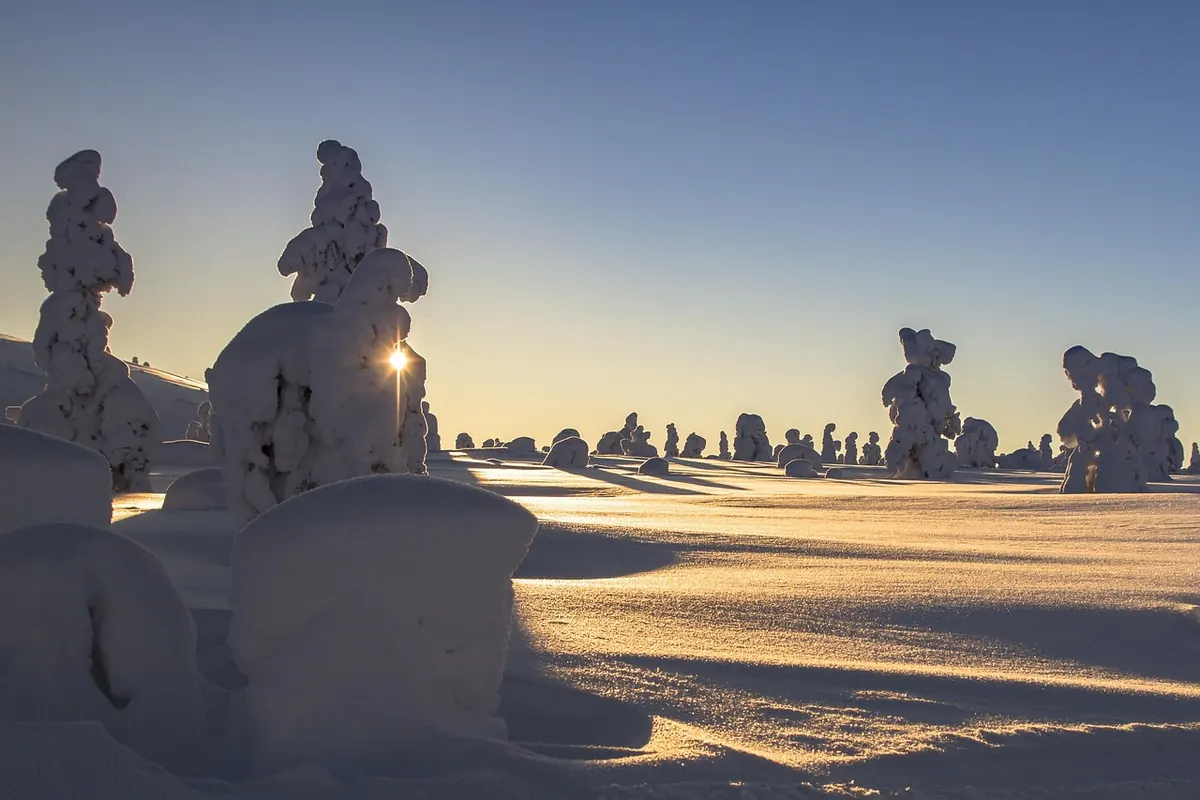
Photo: adege / Pixabay